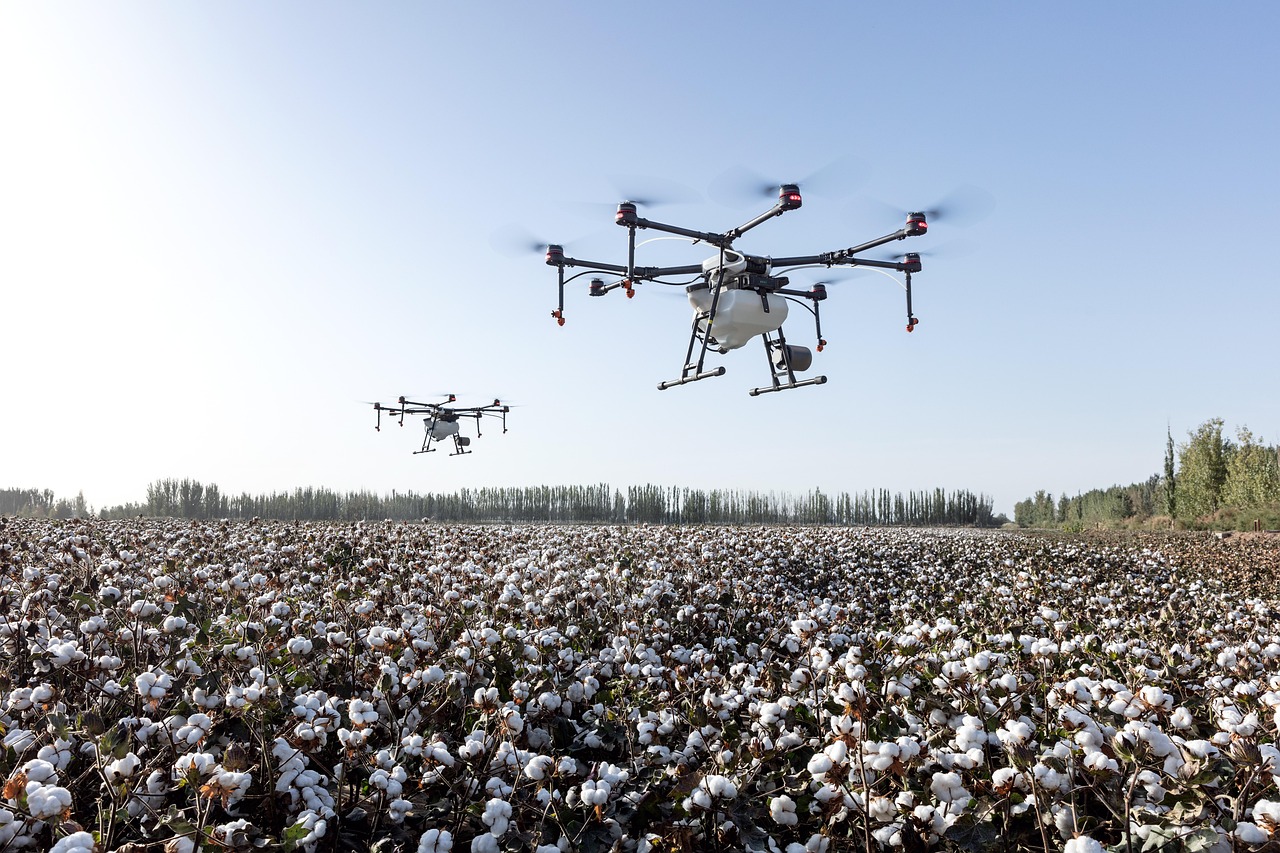
As the global demand for food escalates alongside environmental challenges and labor shortages—and with the world population projected to reach 9.1 billion by 2050—agriculture faces immense pressure to evolve. Agricultural automation has emerged as a powerful solution, leveraging cutting-edge technologies like robotics in agriculture, smart sensors, drone technology, autonomous tractors, and advanced data analytics to boost productivity and sustainability. Yet, amid the surge in adoption, several critical opportunities remain overlooked, offering untapped potential to revolutionize farming practices further. These hidden avenues go beyond conventional mechanization, embracing integrated digital ecosystems, regenerative farming methods, and novel automation strategies that promise to reshape farming efficiency and environmental stewardship.
Farmers and agribusinesses that harness these overlooked opportunities stand to accelerate gains in precision farming, optimize resource use, and enhance crop monitoring in unprecedented ways. Meanwhile, technological innovations continue to lower barriers, making automation accessible not only to large commercial operations but also to small and medium-sized farms committed to sustainable farming. This article delves deep into the most overlooked facets within agricultural automation, highlighting their transformative power, practical examples, key benefits, and evolving trends, helping innovators and practitioners alike rethink how to maximize automation’s impact in 2026 and beyond.




Unlocking Hidden Potential in Agricultural Automation: Beyond the Obvious Technologies
While robotics and autonomous machinery have rightfully captured much attention in agricultural automation, some crucial technologies and applications remain surprisingly underutilized. For instance, the integration of smart sensors combined with artificial intelligence (AI) analytics is often limited to isolated crop monitoring rather than integrated farm-wide decision support. Many farmers underestimate how combining real-time environmental data with predictive modeling can transform resource management, mitigate risks, and optimize yields across whole farm systems.
One overlooked opportunity lies in leveraging automated soil health monitoring. With soil degradation threatening productivity globally, deploying networks of smart sensors to continuously track soil nutrient profiles, moisture content, and microbial activity can enable dynamic fertilization strategies tailored to immediate needs, reducing overuse and environmental harm. Such targeted interventions also lower costs by avoiding blanket applications and improving crop resilience. This approach marks a significant advance over traditional farming practices that rely heavily on seasonal soil tests and estimations, which often fail to capture spatial and temporal variability.
Another often missed innovation involves the fusion of drone technology and data analytics beyond just visual inspection. Precision agriculture drones equipped with multispectral and thermal cameras can collect rich datasets on plant stress indicators, pest infestations, and irrigation deficiencies. However, fully harnessing this data through integrated AI platforms enables early intervention strategies, predictive pest control measures, and adaptive irrigation schedules. This convergence of drone technology with big data analytics has the potential to reduce smart harvesting losses—a vital aspect overlooked despite its direct impact on profitability as shown by recent studies (source).
The optimization of autonomous tractors often focuses solely on tilling and planting. Yet, the real asset lies in their ability to engage in continuous field data collection during varied operations—gathering vast information about soil compaction, moisture stratification, and crop growth patterns. When integrated with smart farm management platforms, these insights can improve scheduling and operational efficiency, decreasing input wastage while increasing the overall sustainability of the farm. Notably, autonomous tractors have been shown to reduce labor hours substantially (source), but their full potential in data-driven continuous monitoring remains under-explored.
Together, these technologies introduce a paradigm where agricultural automation transcends mechanization, evolving towards integrated intelligent systems transforming farming into a proactive, responsive, and low-impact endeavor. The key lies in adopting a systems-thinking approach rather than piecemeal installations, which many farm operators and even agri-tech providers have yet to fully implement.

Precision Farming’s Unexploited Dimensions and Their Transformative Impact
Precision farming is central to the agricultural automation revolution, yet multiple dimensions remain underleveraged, hampering its full impact. The essence of precision farming is tailoring inputs and interventions to specific field zones with high spatial and temporal resolution, but simplistically monitoring a few parameters without integrating comprehensive datasets limits results.
One frequently overlooked facet of precision farming involves microclimate management. Fields often exhibit significant microclimatic variation due to terrain, soil type, and vegetation cover affecting crop performance. Modern IoT-mounted weather stations and localized microclimate sensing allow farmers to customize frost protection, irrigation timing, and wind damage mitigation with pinpoint accuracy. Unfortunately, many farms continue using broad regional weather forecasts rather than exploiting these granular insights, missing opportunities to improve crop health and resource efficiency.
Plant phenotyping automation is another nascent opportunity yet to gain widespread traction. This technique uses automated imaging and machine learning to assess plant morphology, growth rate, and stress responses at the leaf or canopy level, providing early indicators that precede visible symptoms. Implementing plant phenotyping at scale in the field through drone swarms or stationary sensors can greatly enhance early disease detection and guide precise applications of nutrients or pesticides, maximizing productivity and minimizing chemical use.
Improved data analytics and decision-support integration in precision farming ecosystems are critical yet underdeveloped. Farms often collect vast raw data streams but lack fully integrated platforms that can generate actionable, dynamic recommendations combining agronomic, environmental, and market intelligence. Investing in smart dashboards empowers growers to react promptly to emerging threats and opportunities in their crop cycles, which boosts profitability and crop quality.
With ongoing developments in AI-driven sensing technologies, such as those enhancing crop yield predictions, precision farming stands poised to evolve into a comprehensive digital farming paradigm. Embracing its full potential means integrating soil, climate, and plant data layers with machine learning algorithms to optimize farming interventions daily.
Robotics in Agriculture: Uncharted Applications and Efficiency Gains
Robotics in agriculture has revolutionized labor-intensive tasks with autonomous harvesters and weeders, but many practical uses remain underexplored that could deliver exponential efficiency boosts while promoting sustainable farming. Robotic harvesting, for example, is generally limited to a subset of high-value crops, while expanding applications to a broader range of crops would help address labor shortages and reduce manual harvesting costs, as evidenced by increased profitability insights shared by industry experts.
Emerging robotic systems focused on tasks such as non-invasive soil aeration, integrated pest management, and selective crop thinning are transforming conventional farm management practices. For instance, robots equipped with soil penetrators can alleviate compaction gently without disturbing roots or reducing crop yield, a departure from heavy mechanical tillage that often degrades soil health over time.
Moreover, multi-modal robotic platforms, able to combine planting, fertilizing, and pest control operations in one autonomous pass, represent a powerful yet still rare innovation. This capability drastically reduces machinery passes over fields, cutting fuel consumption and greenhouse gas emissions while maintaining or increasing productivity.
On the sorting and post-harvest front, robotic vision systems, integrated with AI, are advancing in identifying subtle differences in produce maturity and quality on the sorting line. This technology minimizes the wastage of imperfect yet edible goods—a critical overlooked source of food loss and economic inefficiency. The hidden return on investment locked within such smart harvesting and sorting technologies has been underscored by studies highlighting improvements in packinghouse operations (source).


Sustainable Farming Opportunities via Smart Sensors and Autonomous Systems
Automated systems in agriculture increasingly contribute to sustainable farming, a critical global priority. However, many sustainability-enhancing implementations are underestimated or overlooked. Smart sensors embedded throughout farmlands enable continuous environmental monitoring, but the insights derived can become transformative only when integrated into predictive and prescriptive control systems.
For example, smart sensors detecting real-time soil moisture and nutrient levels allow for automated precision irrigation and fertilization that minimizes water use and chemical runoff while ensuring optimal plant growth. Such automation addresses escalating concerns about freshwater scarcity and pollution from agricultural runoff, a challenge inadequately resolved by traditional irrigation methods.
Another often missed advantage involves integrated pest and disease forecasting systems that utilize sensor data, weather forecasts, and AI algorithms to predict outbreak risks well before visible symptoms. By automating early-warning alerts and facilitating targeted biocontrol applications, farmers minimize chemical interventions and protect beneficial insect populations, advancing sustainable crop protection strategies.
Practices such as vertical farming automation and smart greenhouses are also gaining momentum but remain underrepresented in many agricultural contexts despite their potential to drastically reduce land and water footprints and enable localized urban farming solutions. Their replication at scale could reshape food systems toward greater resilience and sustainability worldwide.
Ultimately, combining autonomous tractors, smart irrigation, and sensor networks leads toward regenerative agriculture models that regenerate soil health, sequester carbon, and reduce emissions, redefining automation’s role as a sustainability enabler rather than merely a productivity tool.
Comparison of Agricultural Automation Technologies
Filter table rows based on adoption rate level
| Technology | Function | Adoption | Benefits |
|---|
Data Analytics and the Overlooked Power of Integrated Farm Management Platforms
While physical automation equipment garners much attention, the role of data analytics platforms and integrated farm management apps in agricultural automation is often underestimated. These software solutions consolidate data from drones, autonomous tractors, sensors, and robotics into unified dashboards, enabling real-time monitoring and strategic decision-making.
Seamless data integration breaks down farm operations silos, offering a holistic view managing everything from crop health to workforce schedules, inventory, and financial analytics. Such platforms enhance traceability and compliance capabilities, critical in modern sustainable farming.
Tools like the Farmonaut app epitomize this trend—offering satellite imagery-based crop health analysis, AI-enabled agronomic advisory, carbon footprint tracking, and blockchain-based product traceability that improves supply chain transparency. Platforms enable farmers of all scales to transition into precision farming with data-backed confidence and resilience against climate variability.
In 2026, as food production pressures mount and climate risks intensify, the overlooked opportunity lies in bridging hardware automation with advanced data analytics to create intelligent, adaptive farm ecosystems. Farmers and industry stakeholders who embrace this convergence are better equipped to maximize efficiency, sustainability, and profitability across their operations.
Key Takeaways on Overlooked Agricultural Automation Opportunities
- Integrated Smart Sensor Networks: Vital for continuous soil health and microclimate monitoring, unlocking dynamic, site-specific interventions.
- Advanced Drone Data Analytics: Beyond imaging, combining AI for predictive crop and pest management reduces losses and input costs.
- Expanded Robotics Applications: Including soil aeration and multi-tasking robotic platforms to minimize environmental impact and labor.
- Enhanced Precision Farming Dimensions: Incorporating microclimate management and plant phenotyping automation for tailored crop care.
- Data-Driven Integrated Platforms: Connecting all automation technologies for real-time, holistic farm management and decision-making.
| Opportunity | Description | Impact on Farming |
|---|---|---|
| Automated Soil Health Monitoring | Continuous smart sensor networks tracking soil nutrients, moisture, and microbes | Improves fertilization accuracy, reduces waste, enhances crop resilience |
| Predictive Pest and Disease Forecasting | AI-driven alerts using sensor and weather data | Minimizes chemical use, improves crop health, supports sustainability |
| Multi-modal Robotic Platforms | Robots performing planting, fertilizing, and pest control simultaneously | Reduces machinery passes, lowers emissions, boosts efficiency |
| Microclimate Management Systems | Localized environmental monitoring enabling custom crop interventions | Optimizes yields, reduces resource consumption, protects crops |
| Farm Management & Analytics Platforms | Unified dashboards integrating data from all automated systems | Enables strategic planning, improves profitability, enhances sustainability |
What benefits does agricultural automation bring to sustainable farming?
It enhances resource efficiency, reduces labor needs, minimizes environmental impacts, and supports precision interventions that boost crop health and yields.
How can small farms adopt overlooked automation technologies?
By leveraging affordable smart sensors, drone services, and cloud-based farm management apps that require low upfront investment and provide scalable benefits.
What is the hidden ROI in smart harvesting automation?
Efficiencies in labor reduction, yield improvement, and reduced post-harvest loss often yield returns exceeding initial investment, improving profitability in the medium term.
Why is integrated data analytics crucial in farm automation?
It enables real-time, evidence-based decision-making by synthesizing data from multiple automated systems, ensuring adaptive and optimized farm management.