Your calendar says eight hours of work. Your actual output says three. That gap isn't a discipline problem, and buying another productivity app won't close it. What closes it is choosing the right time management framework for the kind of business you actually run — and I mean the unglamorous, specific kind of choosing, not a vague resolution to "get more organised."
I run a small consultancy, and for two years I tracked my own hours in a spreadsheet obsessively (embarrassing, but useful). The finding that changed how I work: roughly 60% of my "working" time went to tasks that produced no revenue and no product — email triage, Slack scrolling, half-finished calls with people who were never going to buy. Once I stopped blaming myself and started rebuilding my week around frameworks that fit the actual shape of my day, I clawed back about eleven hours a week. Not by working faster. By deleting whole categories of work.
Below are the time management tips for busy entrepreneurs that survived contact with reality — the ones I still use in 2026, the ones I abandoned, and the mistakes that cost me real money.
Key takeaways
- Match the framework to your bottleneck: solopreneurs need deep-work blocks, team leads need delegation systems.
- Track where your hours actually go for two weeks before changing anything. Most people are wrong about their own numbers.
- Context switching is the quiet killer — batch similar work or lose 20–30 minutes per switch.
- Delegate or automate anything worth less than your effective hourly rate.
- One framework, used consistently, beats five frameworks juggled badly.
- Protect one recovery block per week. Burnout costs far more than the hours it saves.
The time management frameworks that actually fit an entrepreneur's day
Most framework lists are written for salaried employees with a manager and a fixed meeting calendar. Entrepreneurs don't have that luxury. When you're the CEO, the sales team, and sometimes the janitor, a rigid system collapses the moment a client calls.
Here's what I've tested and what survived:
| Framework | Best for | How it works | My verdict |
|---|---|---|---|
| Time blocking | Anyone with meeting chaos | Assign every task its own calendar slot | Non-negotiable. I run my whole week this way. |
| Eisenhower matrix | Prioritisation under pressure | Sort tasks by urgency and importance | Useful for triage, not for daily planning. |
| Pomodoro (25/5) | Deep, fragmented work | 25 minutes focus, 5 minutes break | Too rigid for me. I use 90-minute blocks instead. |
| 1-3-5 rule | Overloaded founders | One big task, three medium, five small | Underrated. Keeps the day honest. |
| Ivy Lee method | End-of-day planning | Write six tasks, do them in order | Simple, and it works if you actually do it. |
Honestly, the table is the easy part. The hard part is admitting you cannot run all five simultaneously. Pick one for planning (I'd argue time blocking), one for triage (Eisenhower), and ignore the rest until your situation changes.
Why time blocking wins for most founders
The reason time blocking beats to-do lists isn't discipline. It's that a to-do list has no carrying cost. You can write "revise pricing model" every day for six months and never feel the weight of it. A calendar slot makes the trade-off visible: if you block three hours for pricing, you cannot also take that client call.
The catch? Most people block their week too tightly. I did this for months — 15-minute slots from 9 AM to 7 PM — and abandoned the system within a week. Now I block in three-hour chunks and leave deliberate white space for the interruptions that always come.
Find where your hours actually go before you optimise anything
Here's a question worth sitting with: what did you spend last Tuesday morning on?
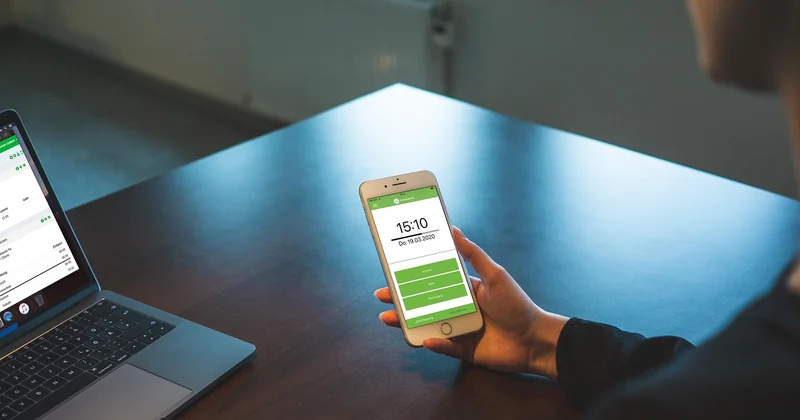
If you can't answer precisely, no framework will help you. I'll admit that when I first started tracking my own hours, I was sure I spent about 50% of my time on client work. The spreadsheet said 22%. That number stung.
The tracking doesn't need to be sophisticated. A simple text file or a spreadsheet with columns for start time, task, and category. Two weeks is enough to spot the patterns. What you're looking for:
- Tasks you do out of habit rather than necessity (checking email first thing)
- The gap between "busy" tasks and revenue-producing tasks
- Specific times of day when your output collapses
For me, mornings are gold and afternoons are a write-off. So deep work goes before noon, admin in the afternoon. Others are the reverse. You won't know until you measure.
What to do with the numbers once you have them
Once you have two weeks of data, you'll see the same three categories every founder eventually sees: work that only you can do, work that someone else could do with a brief, and work that should not exist at all. The third category is where the money hides. A recurring internal report nobody reads? A weekly call that could be a document? Delete it. Nobody will complain.
The context-switching tax nobody budgets for
Every time you jump between tasks — email to proposal, proposal to client call, call back to email — your brain pays a switching cost. I once counted 14 context switches in a single morning. Fourteen.

The cost isn't small. Most people overestimate their ability to multitask and underestimate how long it takes to re-engage with a task after an interruption. That's why "productive" days often feel like nothing got done: the fragments were too small to produce anything complete.
The fix isn't heroic focus. It's structural:
- Batch communications — check email and messages at set times, not continuously
- Group similar work together (all client proposals in one block)
- Turn off notifications during deep work, including Slack
- Say no to meetings that could be async updates
When I started batching my email into two slots a day — 9 AM and 4 PM — response times barely changed. My own stress dropped noticeably. Clients didn't care. Only I did.
Delegation and automation: the only real time-management hack
No framework will save you if you're doing work a £15/hour assistant could do better. I resisted this for far too long, convinced delegating meant losing control of quality. It didn't. It meant I finally had time to focus on the work that mattered.
The rule I now use: anything worth less than your effective hourly rate goes to someone else. For most founders, that threshold sits far higher than they'd guess. Bookkeeping, scheduling, first-pass research, inbox triage, basic customer support — all delegable. All automated or outsourced at a fraction of your rate.
Which tools are actually worth paying for
I've tried too many. Most tools promise productivity and deliver only the feeling of it. The ones that earned their place in my stack:
- A shared calendar system — the backbone of time blocking
- A task manager you'll actually open (mine is dead simple, and that's the point)
- Automation for anything repetitive — form responses, invoicing, reminders
- A virtual assistant for research and admin, even part-time
What I dropped: three different habit trackers, two note-taking apps, and one very expensive project management suite. If a tool requires more than five minutes of setup before it produces value, it's usually not worth the mental overhead.
Questions you probably want answered
How many hours should a founder actually work?
There's no heroic number that works for everyone, and I'd be suspicious of anyone who claims otherwise. The real question is how many hours you can work at your best output. For me, that's about six focused hours, plus two or three of lighter work. Twelve-hour days were possible in my twenties; they aren't sustainable now, and they rarely produced more than the focused version.
What if I can't afford to delegate yet?
Then delegate time to yourself. Block out the hours you'd otherwise spend on low-value work and use them on the tasks that only you can do. Even without paid help, you can automate reminders, templates, and recurring admin. The principle holds: the work you do yourself should be the work only you can do.
Which framework should I start with if I only try one?
Time blocking. It's the foundation everything else sits on. Prioritisation frameworks help you decide what to block, but without the blocking itself, decisions drift into the endless to-do list. Start there, then layer in the triage system once the blocking habit sticks.
Which brings me to the mistake that cost me the most. Early on, I treated productivity as a personal virtue — something I could willpower my way into. It isn't. The founders I know who manage their time well aren't more disciplined than the rest; they've built systems that make the right choice the easy one, and they've accepted that their calendar is the most honest record of what they actually value. If you want to know what you're really prioritising, look at last week's calendar. Not what you meant to do. What you did.